
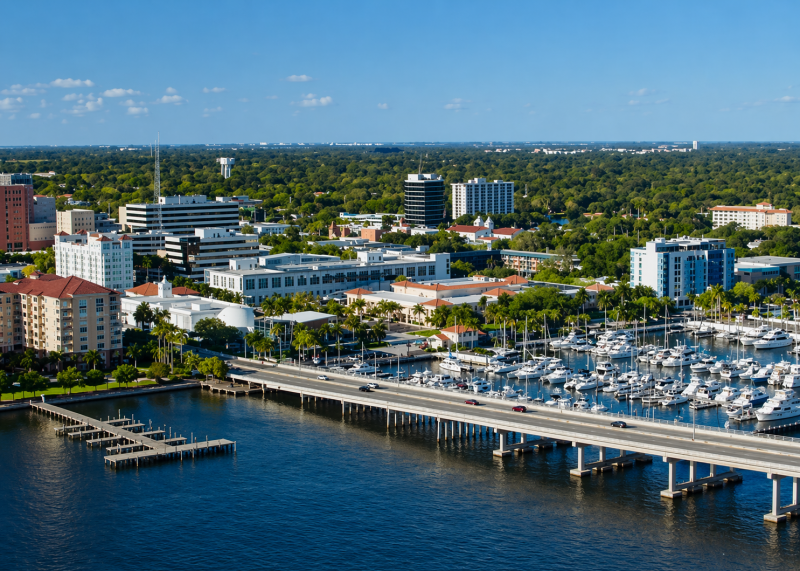
Manatee County, Florida has experienced continued population growth in recent years, driven by in-migration and regional economic activity. Located along the Gulf Coast between Tampa and Sarasota, the county is well-positioned within a broader growth corridor with access to key transportation infrastructure.
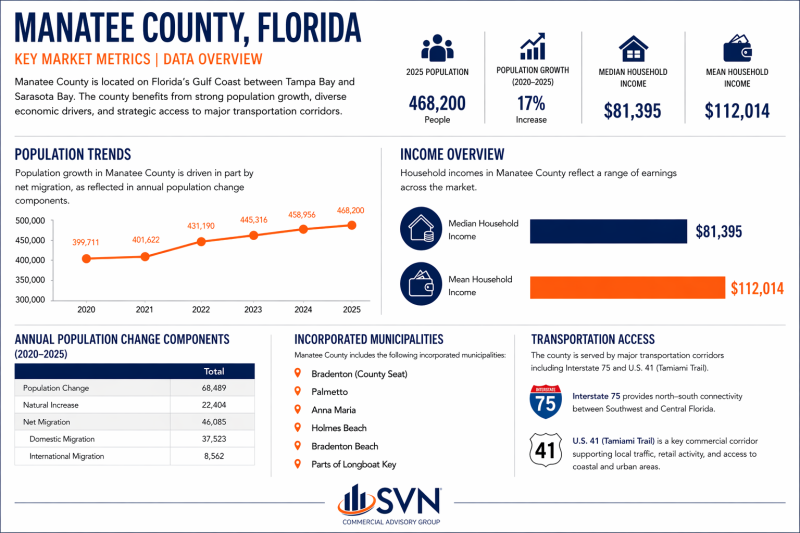
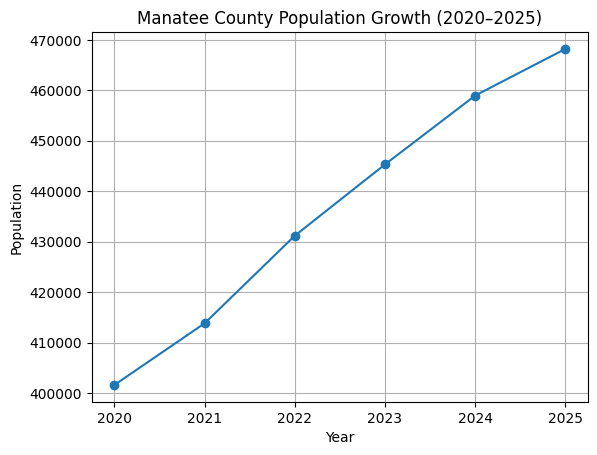
Manatee County Population Trends
- Population: 468,200 (2025 estimate)
- 17% Increase between 2020 and 2025
- 2020 Population: 399,711
Source (U.S. Census Bureau – Population Estimates)
(Dataset: “Annual Estimates of the Resident Population for Counties” → Florida → Manatee County)
Manatee County Economic Base
Manatee County’s economy is supported by a diverse mix of industries, with healthcare, retail trade, construction, and professional services serving as key sectors. Healthcare plays a central role, supported by a network of hospitals, outpatient facilities, and medical office users. Retail trade continues to expand alongside population growth, driven by demand for both neighborhood-serving and regional retail. Construction activity reflects ongoing residential and commercial development, while professional and business services support a broad range of administrative, financial, and corporate functions across the market.
Source (Manatee County Economic Development Corporation)
Manatee County Connectivity
The county is served by major transportation corridors, including Interstate 75 and U.S. 41 (Tamiami Trail), which provide primary north–south connectivity along Florida’s Gulf Coast. Interstate 75 facilitates regional access between Southwest and Central Florida, while U.S. 41 serves as a key commercial corridor supporting local traffic, retail activity, and access to coastal and urban areas. These routes provide connectivity to surrounding markets, including Tampa and Sarasota, supporting both commuter movement and the flow of goods and services throughout the region.
Source (Manatee County Government)
Manatee County Incorporated Municipalities
Manatee County includes several incorporated municipalities, led by the county seat of Bradenton, which serves as the administrative and economic center. Additional municipalities include Palmetto, Anna Maria, Holmes Beach, and Bradenton Beach, along with portions of Longboat Key. These municipalities collectively contribute to the county’s residential base, coastal access, and commercial activity.
- Bradenton (County Seat)
- Palmetto
- Anna Maria
- Holmes Beach
- Bradenton Beach
- Parts of Longboat Key
Source (Manatee County Government)
Manatee County Household Growth
- Total Housing Units: 214,510 (2023 Estimate)
- Occupied Housing Units: 168,504 (2023 Estimate)
Source (U.S. Census Bureau – ACS Table DP04)
Manatee County Income
Household incomes in Manatee County reflect a range of earnings across the market, with a median household income of $81,395 and a mean household income of $112,014.
- Median Household Income: $81,395
- Mean Household Income: $112,014
Source (U.S. Census Bureau – ACS Table S1901)
Manatee County Migration Trends
Population growth in Manatee County is driven in part by net migration, as reflected in annual population change components. Inflows of new residents have contributed to overall population increases in recent years, complementing natural population change. This pattern of growth has supported the county’s expanding residential base and is reflected in rising population totals over time.
Source (U.S. Census Bureau – Components of Change)
Summary
Manatee County continues to demonstrate measurable population growth supported by migration and regional accessibility. The county’s economic base and infrastructure contribute to ongoing demand across residential and commercial sectors.
Click here to see more of our Manatee County opportunities